A special cake

When I travel around Italy I often come across a special cake or pastry particular to the town or city I am in. Sometimes it is only available in that place. In some cases it has become so popular and famous it has travelled further.
One of my favourites is the sfogliatella from Naples. I can’t go to Naples without sampling several of these. Fortunately the sfogliatella is available far and wide.

In Puglia we hunted down the pasticciotto in the town where it began, Galatina. We continued our search for more in different towns in Puglia and were rarely disappointed.
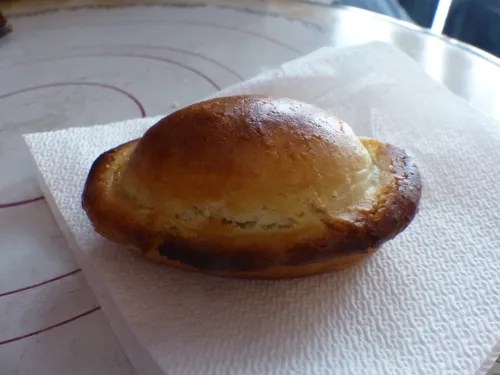

We found Polenta e Osei in Bergamo and had to try several to be sure we liked them. Research can be tough work.
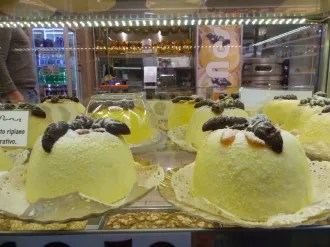
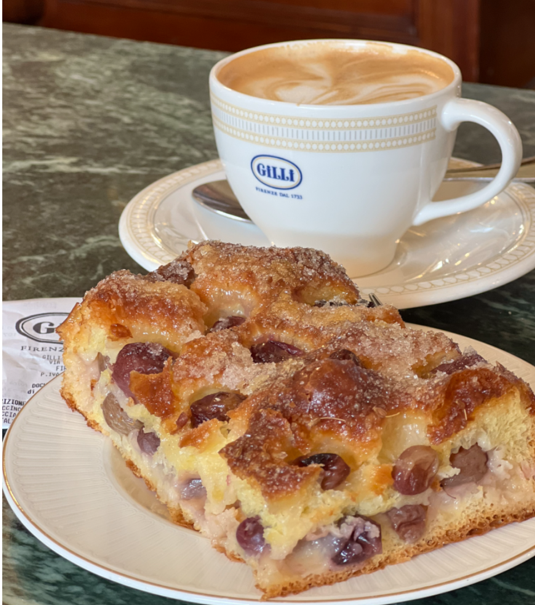
Schiacciata all’uva appears in Florence around Carnevale time. I like to get mine at Caffe Gilli on the edge of Piazza Republica, but they are found around Tuscany.
We went to Guardiagrele in Abruzzo to sample Nun’s breasts.

There was a large sculpture devoted to this delight, but it has been taken away and we had to make do with a smaller one outside the pasticceria where they are made.

Lucca has a special Buccellato which has a slight aniseed flavour. Taddeucci is the place to buy them.

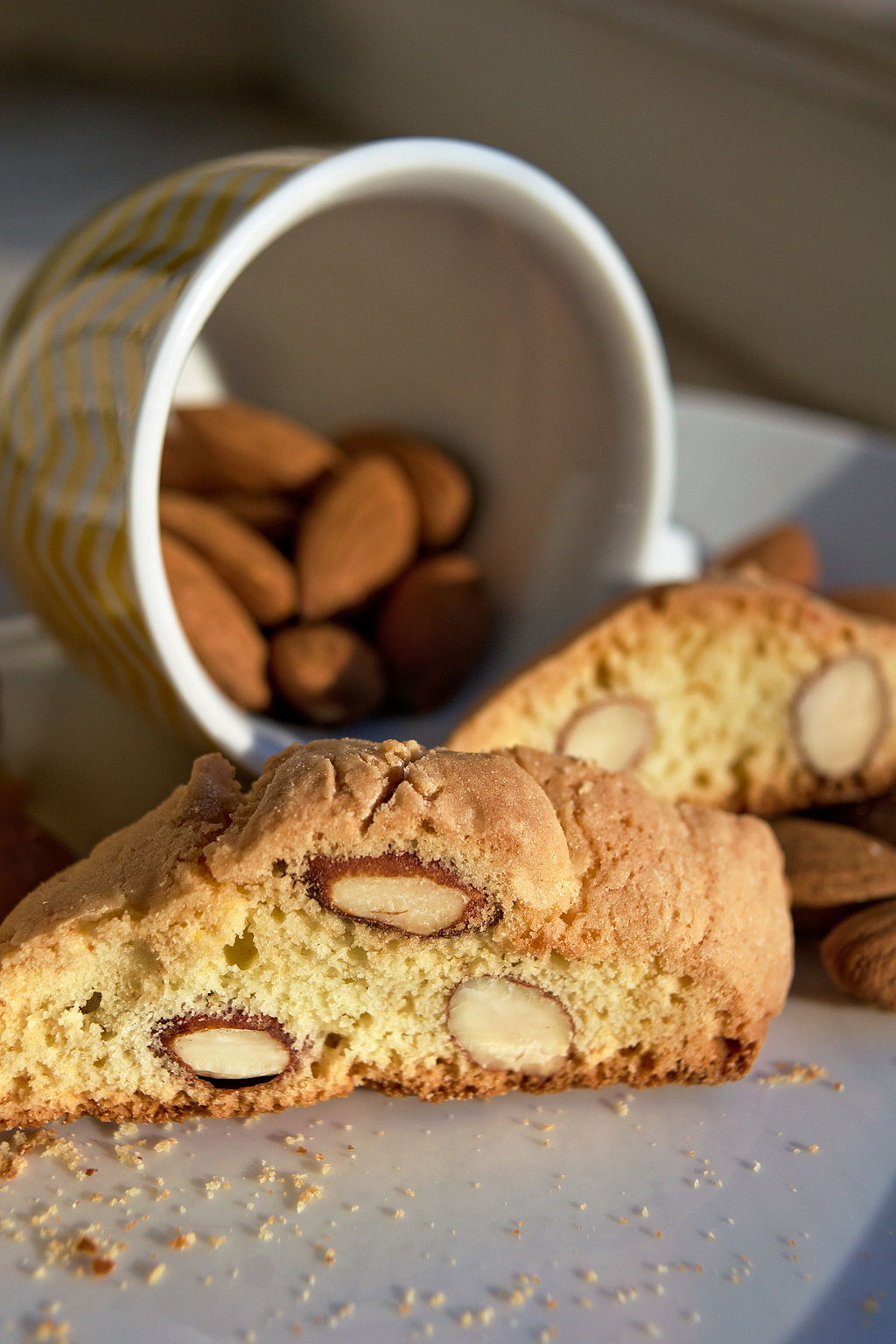
Cantucci, a special type of biscotti, originated in Prato in the Middle Ages, and are now eaten world wide – as they should be.

All these delicious special cakes made me think Bagni di Lucca should have a local cake, only available in our local bars and bakeries.

I made a possible contender. Chestnuts and honey are plentiful in our area so my cakes are made with chestnut purée with marscapone and honey icing on top.
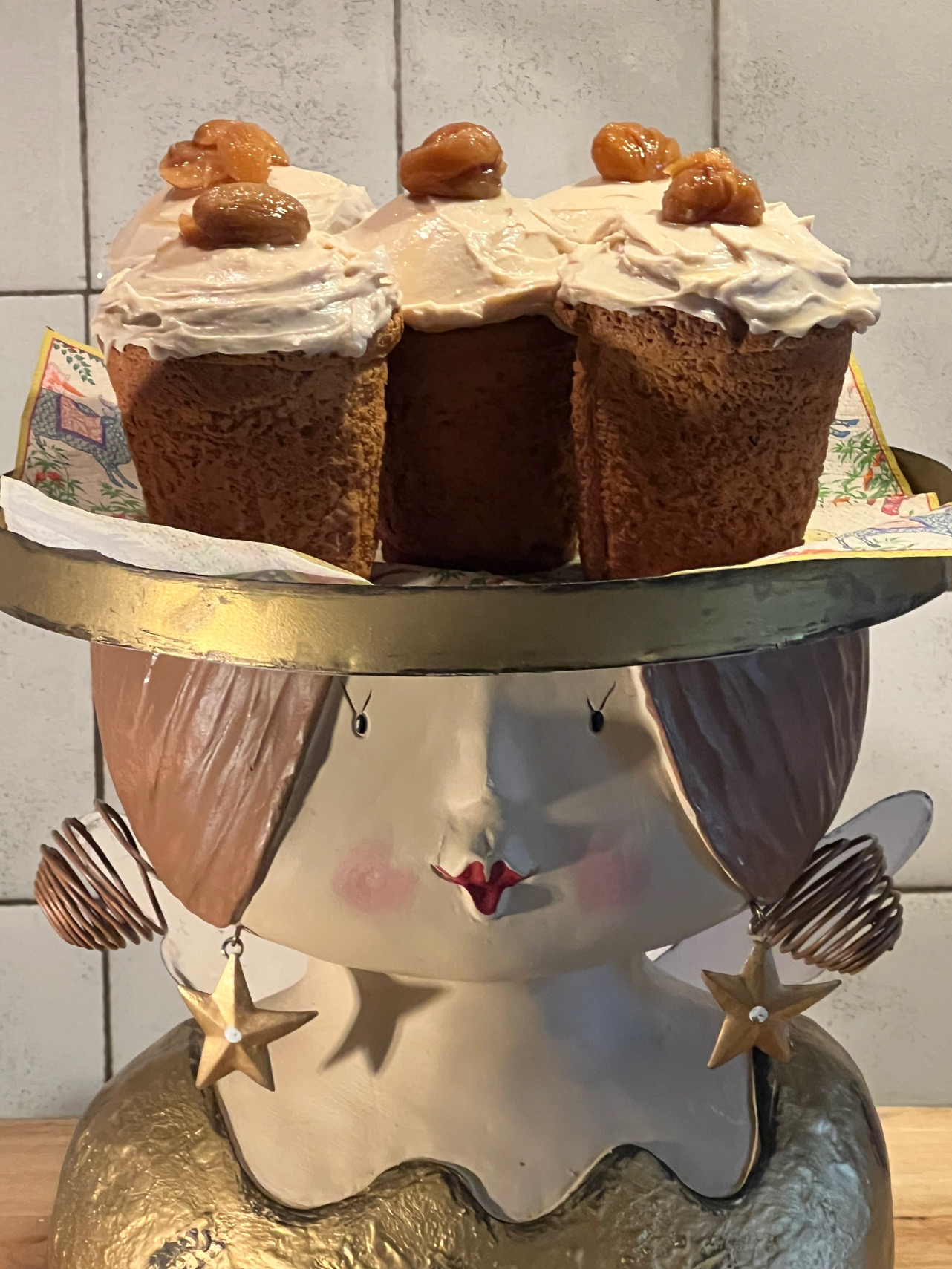
I invite anyone interested to come up with a cake or pastry to represent Bagni di Lucca and maybe we can encourage local bakeries to make them and start a tradition…they have to start somewhere.

Leave a comment or send me an email…debrakolkka@gmail.com if you have a cake suggestion.

An old tradition in Bagni di Lucca

Bagni di Lucca has a long history of making figurines from Plaster of Paris, or gesso, as it is called here. The tradition began in the 13th century when people from Bagni di Lucca started going to France to sell their silk and they became intrigued by the use of Plaster of Paris to make mortuary masks.

They experimented with it, as the soft alabaster, one of the main ingredients to make that type of plaster, was abundant in the area. They realised it would be possible to make inexpensive religious statues by making moulds and filling them with plaster…much cheaper than the usual carved marble or stone.

The figurines became very popular, as not everybody could afford a Della Robbia, or other original for their home or church. Presepi, or nativity scenes were big sellers and salesmen from the area would travel far and wide selling their wares.

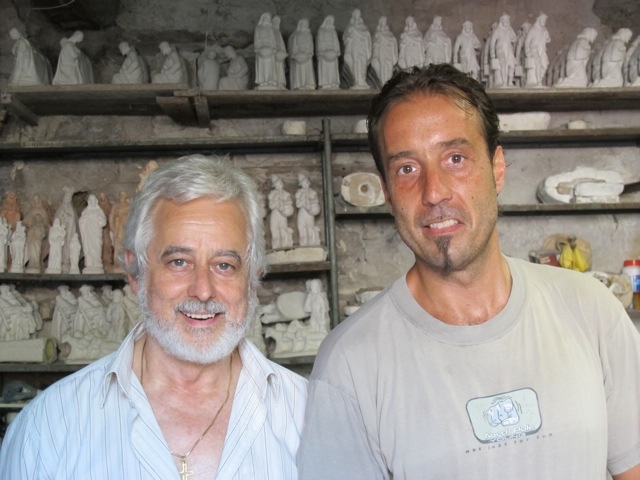
I was very lucky to be able to see one of the last producers of figurines in Bagni di Lucca, and the only one who still makes his statues by hand. Meet Simone from Arte Barsanti.

20130624-073209.jpg

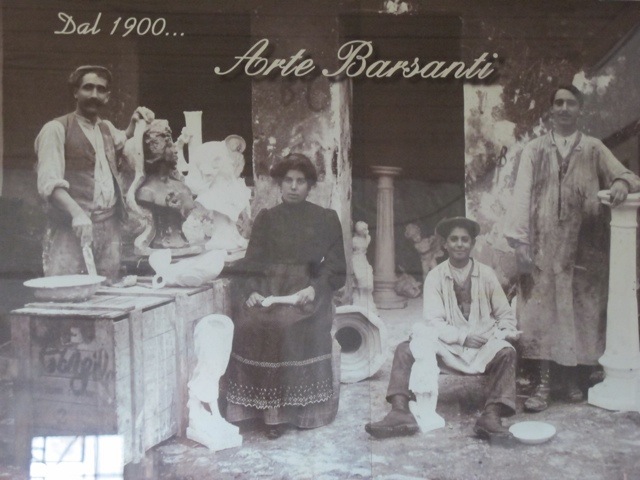
The business was started by Simone’s great-grandfather in 1900. At its peak there were 60 people employed. Now it is just Simone with some helpful advice from his uncle Carmelo.

20130624-073227.jpg

The little factory is a treasure trove of figurines, moulds and paraphernalia from years of work.


Simone took us through the process of making a figurine. First the mould is prepared.


The plaster powder is mixed with water until it is the consistency of yoghurt.


Then is poured into the prepared mould and shaken to get out as many air bubbles as possible.


The statue is then left to cure for about 20 minutes. If the figurines are under 30cm high they are solid plaster. If they are bigger than that they are hollow to save on plaster and to make them less heavy.

Once out of the mould, the figurines are finished by hand to remove any rough patches and fill any small imperfections.

20130624-125600.jpg

They are then fired in the wood fired oven room.

20130624-125651.jpg

The next step is to hand paint each figurine. The flesh coloured parts are spray painted first.

20130624-125750.jpg

The rest is painted with brushes of varying sizes.

20130624-125922.jpg

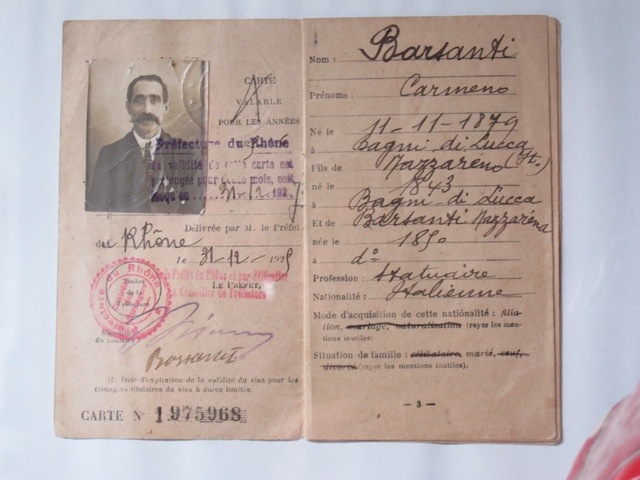
We were taken to the top floor where there is a little museum with some of the history of the business.

20130624-010008.jpg

20130624-010037.jpg

20130624-010059.jpg

20130624-010125.jpg

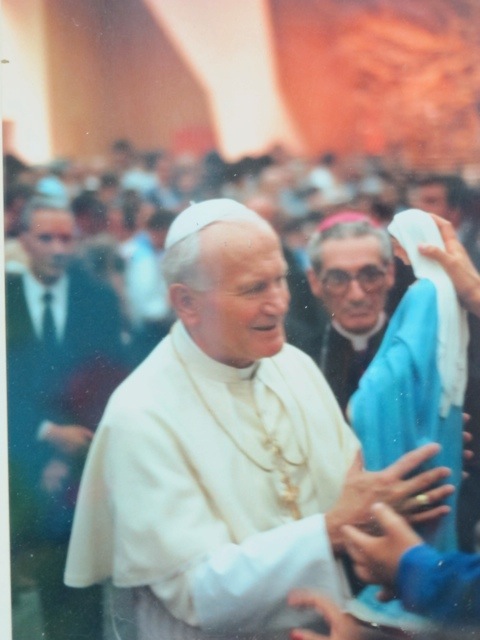
There is a photo of a recent Pope receiving a Barsanti figurine.

20130624-010220.jpg

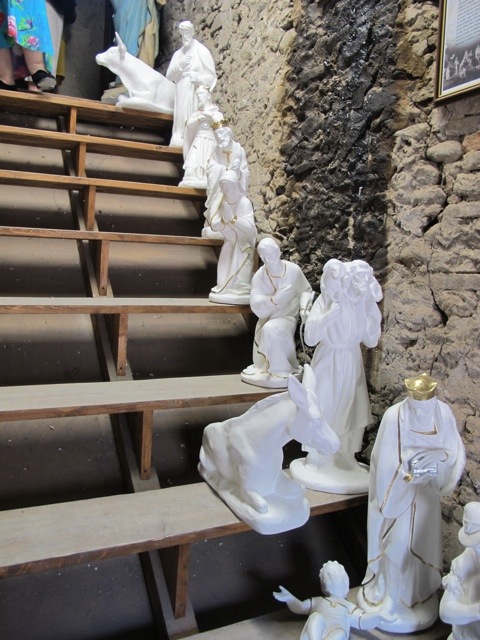
…and some old presepi, including one in a pumpkin.

20130624-010305.jpg

20130624-010321.jpg

…some old accounting equipment.
20130624-010532.jpg

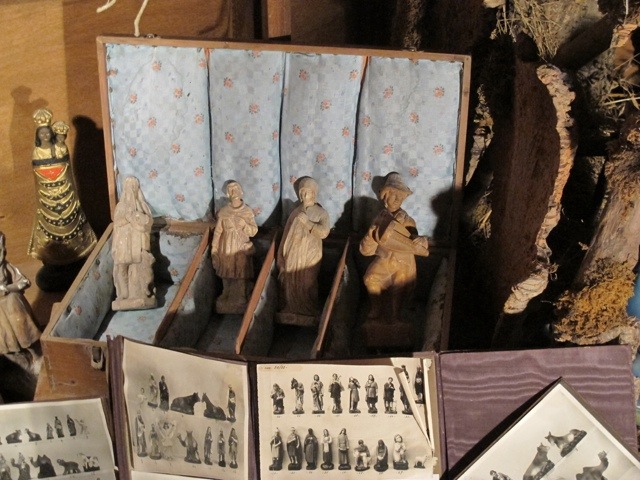
Best of all was an old suitcase which the travelling salesmen would take around the country to display their wares.

20130624-010645.jpg

There is a delightful story that when Christopher Columbus arrived in America the first person he saw was a fellow from Lucca with a suitcase full of presepi for him to choose from.

We were given a beautiful presepio to take with us…my first…thank you Simone and Carmelo for a wonderful visit.

20130624-011231.jpg

I really hope this wonderful tradition can be kept alive in Bagni di Lucca.

http://www.artebarsanti.it

info@artebarsanti.it

39 0583 87882